Front Yard Landscaping Ideas for a Welcoming Santa Ana CA Entrance
A front yard in Santa Ana has to do several jobs at once. It needs to look inviting from the street, hold up through hot dry stretches, and still feel connected to the home rather than pasted on as an afterthought. That balance is where good front yard landscaping earns its keep. The most successful yards in this part of Orange County are not always the biggest or the most expensive. They are the ones that make the approach to the front door feel intentional.
Santa Ana has a distinct landscape context. The light is sharp, summer afternoons can be punishing, and water-wise decisions are no longer a niche preference. Many neighborhoods also have homes with strong architectural character, Spanish revival, ranch, cottage, mid-century, tract homes with modest setbacks. A front yard that works here usually respects that architecture and uses materials and plants that belong in the climate.
I have seen homeowners spend heavily on a beautiful new entry walkway, then lose the effect by surrounding it with thirsty lawn and random shrubs that fight the heat. I have also seen small yards completely transformed by a simple change in layout, a few smart hardscaping moves, and a restrained plant palette. The welcome starts long before someone reaches the porch. It begins at the curb, travels through the path, and lands at the front door.
Start with the approach, not the plant list
When people think about custom landscaping ideas, they often begin with plants. In practice, the better starting point is movement. How does someone arrive? Where does the eye go first? Is the front door obvious, or does it disappear behind parked cars, overgrown hedges, or a wide blank lawn?
A welcoming entrance usually has a clear sequence. The curb edge introduces the property. The path gives direction. The planting frames the route. The porch or stoop provides a pause. If any one of those parts is weak, the whole experience feels less inviting.
In Santa Ana, this often means widening a narrow builder-grade path, softening a straight shot to the door with planting beds, or adding visual weight near the entry so the house does not feel detached from the yard. Even a compact lot can support that sequence. A path that shifts a few feet rather than running dead center can create room for layered planting, decorative gravel, or low walls that add depth.
There is also a practical side to this. A clear and comfortable path matters in heat. When visitors are crossing a blazing driveway or stepping through sparse landscaping with no shade, the entry feels harsher than it needs to. A well-placed tree, a widened landing, and light-colored paving can make the front of the house feel noticeably cooler.
The strongest Santa Ana front yards usually share a few priorities
- A readable path to the front door, wide enough to feel welcoming rather than purely functional
- Plant choices that tolerate heat, reflected light, and lean irrigation once established
- Hardscaping materials that complement the house and reduce maintenance
- Layering at different heights so the yard has shape without blocking windows or creating security issues
- A clean edge between planting, paving, and groundcover, which makes the whole property look more finished
These are not flashy ideas, but they are the ones that consistently make a yard look polished.
Rethink the lawn before it becomes the default
A traditional lawn can still have a place in front yard landscaping, but it should earn that space. In Santa Ana, a large front lawn often creates more problems than benefits. It demands water, regular mowing, edging, fertilizing, and repair where sun bakes the soil or foot traffic cuts through corners. More importantly, a broad lawn rarely contributes much to a welcoming entrance unless it is exceptionally well kept.
That does not mean every front yard should be gravel and succulents. The better question is how much green surface you truly need. Many homeowners are happier when they reduce lawn to a smaller panel or eliminate it altogether in favor of low-water groundcovers, decomposed granite, planted bands, or permeable hardscaping.
A smaller green area can still soften the front yard and cool the eye, while freeing up room near the walkway and porch for plants with more texture and seasonal interest. I have seen homes instantly gain curb appeal when half the lawn was replaced with a broad curve of native-adapted planting and a more generous entry walk. The yard felt less empty, and the house looked more grounded.
This is where drought resistant landscaping becomes more than a trend. It becomes a design strategy. Water-wise does not need to look sparse. A restrained combination of shrubs, grasses, flowering perennials, and sculptural accents can look lush with a fraction of the water a lawn requires.
Hardscaping sets the tone before plants fill in
Plants change with seasons and maturity. Hardscaping stays. For that reason, it deserves careful thought. The path to the front door, retaining edges, steps, low walls, pavers, decorative gravel, and driveway transitions all shape how the yard functions every day.
In Santa Ana, hardscaping materials need to stand up to sun exposure and complement the style of the home. A Spanish-style house can carry warm-toned tile accents, textured stucco planters, or tumbled pavers beautifully. A ranch home often looks best with simpler concrete, natural stone, or clean modular pavers. Mid-century homes usually benefit from stronger geometry and fewer ornamental flourishes.
There is also a comfort factor that gets overlooked. Dark paving can become extremely hot in the afternoon. Loose gravel near the main walkway can migrate and create a messy edge. Stepping stones that look charming in photos may be awkward for older visitors if spacing is too wide. Good hardscaping is not just attractive. It is usable.
One of the most effective upgrades for a front yard entrance is a path that feels substantial. That might mean widening it to at least four feet in the main section, giving it a gentle curve, or adding a small landing at the porch. Those changes are not dramatic on paper, but in person they make a house feel more hospitable.
Low seat walls or raised planters can also help define the entry without making the yard feel closed off. In neighborhoods where front yards are visible landscaping santa ana and social, this can create a soft threshold between public and private space. It signals care and permanence.
Planting for heat, texture, and year-round structure
A welcoming front yard needs more than flowers that peak for a few weeks. In Southern California, the yard should still look composed in August when the light is intense and many plants are under stress. Structure matters more than bloom count.
The most reliable planting plans use a layered mix. Start with one or two anchor elements, often a small tree, a bold agave, a group of large grasses, or a well-shaped evergreen shrub. Then build around them with medium-height shrubs and lower mounding or trailing plants. This gives the yard visual depth and helps avoid the common problem of stuffing the foundation with a line of unrelated plants.

Here are plant types that often perform well in Santa Ana front yards when matched to the site and properly established:
- Accent plants such as agave, aloe, or red yucca for bold form near walks and entries
- Shrubs like westringia, dwarf pittosporum, salvia, or lavender for structure and color
- Grasses including muhly grass or deer grass for movement and softness
- Groundcovers such as creeping rosemary, dymondia, or lantana in sunny zones
- Small trees like desert willow, olive, or crape myrtle where scale and placement allow
Placement matters as much as species. A striking aloe at the inside curve of a walkway can act like a visual guide. Lavender near the path adds fragrance without overwhelming the space. Muhly grass catches backlight beautifully in late afternoon and can soften a harder edge of paving or wall. The right tree, even if it starts small, changes the feeling of the entire front yard by giving it vertical presence.
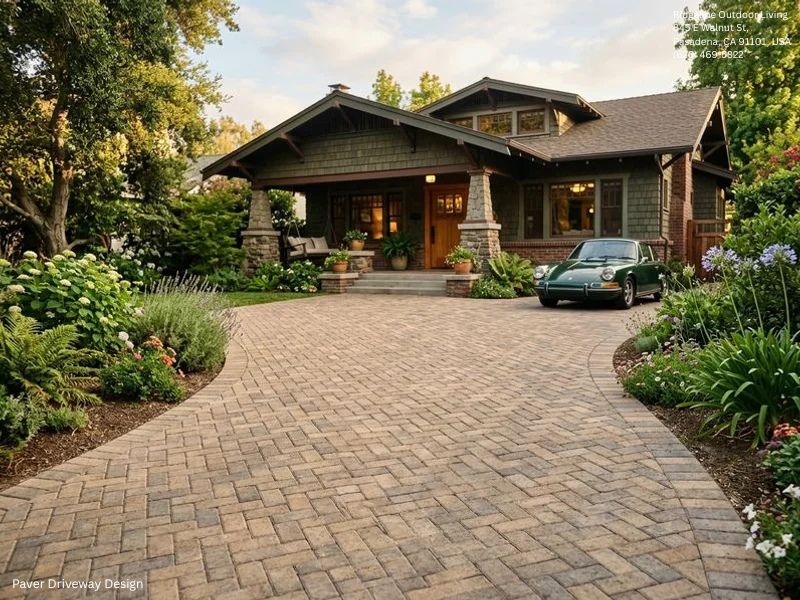
One caution from experience, succulents alone rarely make a front entry feel warm. They can be stunning, but if the whole yard is a collection of spiky forms and bare gravel, the welcome is diminished. The better approach is contrast. Pair bold succulents with softer shrubs, grasses, or flowering perennials so the design feels balanced.
Shade is part of hospitality
If the front door faces west or southwest, the entrance can feel punishing in summer. This is common in Southern California tract neighborhoods, where orientation was not always designed for comfort. The fix does not have to be elaborate, but it should be deliberate.
A small tree positioned to cast afternoon shade near the path or porch can change how the whole entry feels. The right canopy softens the architecture, lowers surface temperatures, and makes the house more inviting even from the street. A tree also gives the front yard a sense of maturity much faster than low planting alone.
The challenge is choosing the right tree for the lot size and the infrastructure below. I have seen homeowners regret planting species that outgrew the narrow parkway or lifted paving near the walk. In front yards with limited space, smaller-scale trees often work better than fast-growing shade trees. The goal is filtered comfort, not a future root problem.
If a tree is not possible, a pergola element over the walkway, a porch trellis, or strategic screening on the sunniest side of the entry can help. This is where custom landscaping ideas become especially useful. The most successful solution depends on architecture, setbacks, sun angle, and how people actually use the yard.
Use color with restraint
Santa Ana light can make color read stronger than expected. A palette that feels subtle in the nursery can look loud in full afternoon sun. That is why many polished front yards rely on foliage texture and a limited flower palette rather than trying to produce nonstop bloom in every bed.
Silver foliage, blue-green succulents, deep green shrubs, and grasses with a soft tan winter tone all work well in this climate. Flowering accents are best used as punctuation. Salvia, penstemon, kangaroo paw, and lavender can all provide seasonal color without turning the yard into a patchwork.
Hard materials also influence color balance. Warm gravel, buff pavers, and natural stone can tie a planting scheme together. Cool gray concrete can look crisp and modern, but it may need warmer planting around it to avoid feeling stark. Think of the front yard as a composition, not a catalog of favorite plants.
A smaller yard can feel richer than a larger one
This surprises homeowners all the time. A modest front yard in Santa Ana can often feel more inviting than a broad one because it concentrates the design around the entrance. There is less empty space to solve and more opportunity to use each square foot intentionally.
A narrow side strip beside the entry walk can become a planted ribbon with fragrance and texture. A small forecourt near the porch can support an accent pot, a bench, or a low wall that makes the house feel occupied and cared for. Even a tiny setback can carry real personality when the scale is right.
Large front yards can actually be harder. If the walkway is too thin relative to the lawn and the planting hugs only the foundation, the house can feel stranded in the middle of a field. That is where islands of planting, a secondary path, or a broader hardscape area near the entry can help distribute visual weight.
Lighting finishes the welcome after sunset
Landscape lighting is one of the most underused tools in front yard landscaping. It is also one of the most effective. A house can look flat and uninviting at night even if the daytime design is strong. Thoughtful lighting solves that quickly.
The goal is not brightness. It is legibility and warmth. Visitors should see where to walk, identify steps and edges, and feel guided toward the door. Soft path lights, downlighting from the porch area, and subtle uplighting on one or two architectural or plant features usually do more than a row of harsh fixtures.
In Santa Ana neighborhoods where homes are close together, glare matters. Overlighting the yard can make the property feel commercial and can annoy neighbors. A softer layered approach is usually more elegant. Warm color temperatures tend to flatter both stucco and planting better than cool white light.
Lighting also adds practical value. It improves safety, supports security, and extends the usefulness of the front yard if you like to sit outside in the evening.
Where drought-wise design can still feel lush
Some homeowners hear “drought resitant landscaping” and imagine a yard that looks bare, rocky, and severe. That is usually the result of poor design, not water-wise design. The Santa Ana climate actually supports a broad range of attractive low-water plants if you organize them well and give them the right start.
The first year matters. Even low-water landscapes need regular establishment irrigation. Roots have to grow deep enough to handle summer stress. This is where many installations stumble. People assume drought-tolerant means no-care from day one, then plants struggle and the whole yard gets blamed.
Mulch helps more than most people expect. It moderates soil temperature, reduces evaporation, and improves the finished look of planting beds. Drip irrigation, when designed correctly, can keep root zones targeted rather than spraying sidewalks and landscapers in santa ana ca driveways. Hydro-zoning, grouping plants with similar water needs together, makes ongoing maintenance much simpler.
A lush feeling comes from fullness at different levels, not from overwatering. Repeating a few dependable plant forms, allowing them room to mature, and avoiding too many isolated specimens creates a more generous look. This is one of those details that separates a designed yard from a piecemeal one.
Match the landscape to the house, not to a trend
Trends move quickly in landscaping. Black mulch, all-white gravel, oversized succulents in every bed, synthetic turf from property line to property line, these choices can date a front yard fast if they are not supported by the architecture.
A welcoming Santa Ana entrance usually feels better when the landscape appears to belong to the house. A charming 1940s cottage can support a looser mix of flowering shrubs, decomposed granite, and a simple brick walk. A crisp contemporary remodel may look stronger with cleaner paving lines, restrained planting masses, and a sculptural accent. A Spanish-style façade often benefits from rich material texture and plantings that echo Mediterranean character.
This is where custom landscaping ideas matter most. The best front yards are not copied wholesale from a photo. They respond to lot width, porch depth, garage placement, sun exposure, and the personality of the home itself.
Common mistakes that make an entrance feel less inviting
The front yard does not need to be perfect, but there are a few mistakes that repeatedly undercut the welcome.
An overplanted walkway is one. Plants leaning into the path can make guests feel like they are intruding or brushing through a hedge to reach the door. Another is choosing shrubs that will eventually block windows or bury light fixtures. People often install for the one-gallon size and forget the five-year size.
Scale problems show up constantly. Tiny plants scattered across a wide yard can look fussy and unfinished. On the other hand, oversized boulders, giant agaves, or massive grasses can overwhelm a modest tract home. The right proportion makes the yard feel calm.
Then there is maintenance creep. A design may look great on installation day, but if it requires constant pruning, blowing gravel back into place, and replacing thirsty annual color, it will rarely look good long term. A truly welcoming yard needs to be maintainable by the homeowner or within a realistic service budget.
Budgeting for impact
Not every project needs a full teardown. If the budget is limited, focus on the elements visitors notice first and the problems that most affect the experience of arrival.
A new path and refreshed planting near the entry often produce more visible improvement than redoing the entire yard at once. Updating hardscaping at the front walk, adding one small tree, simplifying the lawn area, and installing basic lighting can make an older frontage feel newly cared for. If the irrigation is failing, address that early. There is little sense in installing beautiful new planting on a system that cannot support it.
Phasing can work well in Santa Ana front yards because the climate allows planting across much of the year with proper timing and irrigation. Hardscape can come first, planting next, lighting after that if needed. What matters is that the overall plan is coherent from the beginning.
The front door should feel like the destination
Everything in the yard should support the arrival at the front door. That may sound hardscaping santa ana obvious, but many front yards lose sight of it. They become a mix of decorative elements without a clear center.
When the entrance works, people feel it right away. The path is easy to find. The house feels settled into its site. The plants soften rather than smother. The hardscaping feels solid underfoot. There is a sense that someone has thought through both beauty and use.
For a Santa Ana home, that often means embracing a simpler, climate-appropriate design rather than forcing a style that belongs somewhere wetter or cooler. A welcoming entrance here can be generous without being lavish, colorful without being chaotic, and drought-wise without looking austere. That is the sweet spot. It is where curb appeal, practicality, and regional character finally line up.